When you don't control anything
Someone says, "Let's shoot outside, it's a beautiful day." It's 12 on the dot, the sun is brutal and you end up with horrible shadows on the face. Ideally you'd shoot at five or six in the afternoon, with softer light, but you can't always choose the time, the location or the weather. On my last few shoots I've had to shoot exteriors several times with nowhere to put lights, so all you can do is shape the light that's already there.
There's a saying I love: light is our best friend and our worst enemy, because it works both for us and against us. At noon, it's working against us.
For reference, I shot this on a Sony A7S III with a Tamron 28-75 mm f/2.8 and a variable ND, which was almost maxed out with all that light.
1. Diffuse the sun from above
First thing, as always, is deciding on the frame. Then I bring in diffusion: ideally a big butterfly frame, but if the budget won't stretch, a 5-in-1 reflector about two meters across, using the translucent part, works as an alternative. I rig it on stands with clamps (the more clamps you have, the better; they're super useful).
A tip with stands: raise the top riser first. That way, if you need to go higher later on, you've still got the bottom one.
With the diffusion up, you can play with direction. At noon the light comes down almost straight; I angle the frame a bit so it isn't sitting directly overhead, butterfly-style, because otherwise the light looks really flat. Then I check exposure with false color: with my highlights between pink and gray, the skin is well exposed and the background still holds detail.
2. If there's budget, add light; if not, take it away
With budget, you could bring in a big light, like a 600 or a 1200, as close to frame as you can get it, to give the light more direction. If not, what you've got left is negative fill: a flag or a piece of black fabric as close to the talent as you can, without it creeping into frame. In the video I put it in and take it out so you can see the difference. It's subtle, but it adds contrast, and I like the image to have that contrast.
3. Find the shade
Sometimes you get lucky and can pick a frame in the shade. It can still look a bit flat, without much definition, especially if there are white walls nearby bouncing light all over the place. That's where negative fill comes to the rescue again: bring the black fabric in close to the talent and the light stops hitting the white surface, the fabric soaks it up and the contrast comes back.
If you don't have flags, use whatever you've got on hand, Art Attack style: black poster board, a garbage bag or a thick piece of fabric. Having fabric around is always useful (it's also great for blacking out windows), but with a real flag you have more freedom to get in close and do more interesting things.
4. Weigh everything down
When you're working with fabric outdoors, the wind wins: the fabric turns into a ship's sail, drifts into frame or knocks the stand over. Use sandbags or any kind of weight, or have someone hold on to it.
5. A single bounced light works indoors too
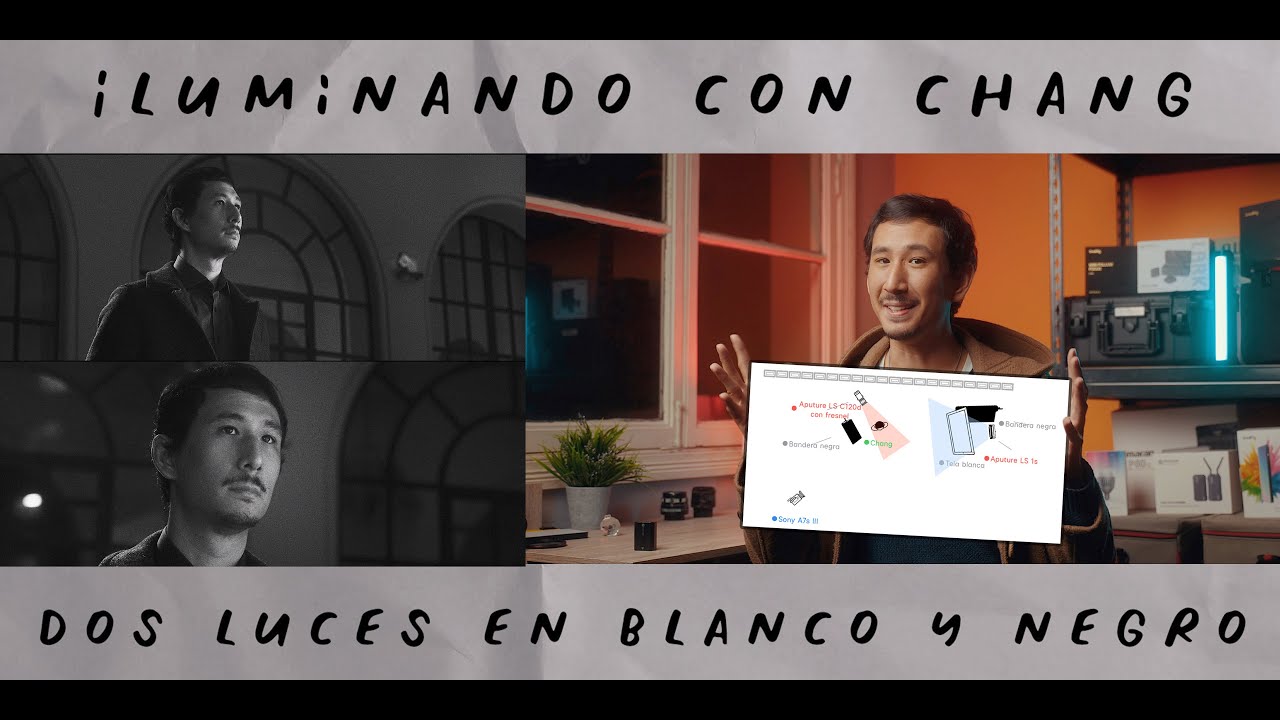
This idea works indoors too. You're usually taught that you need a key light, fill and backlight. But you can use a single light, bounce it into a white fabric, and that's it: the fabric becomes your source.
6. Pick the time with an app
If you can choose when to shoot, your job gets a lot easier. In the video I shot the last part around five, with the low sun giving me a nice backlight. To know where the sun will be at any given hour, I use Helios, which has augmented reality. If cinematography is how you make a living, Sun Seeker is more complete, though it's a paid app.
Three or four days out, the sun doesn't change much. If the shoot is three months away, its position does change, so check again closer to the date. If you know where the sun is going to be, you can create a much more dynamic image. And if not, you know the drill: the tricks from the top.
Gear I mention
These are affiliate links: if you buy through them, I get a small commission at no extra cost to you.