Fooling the audience
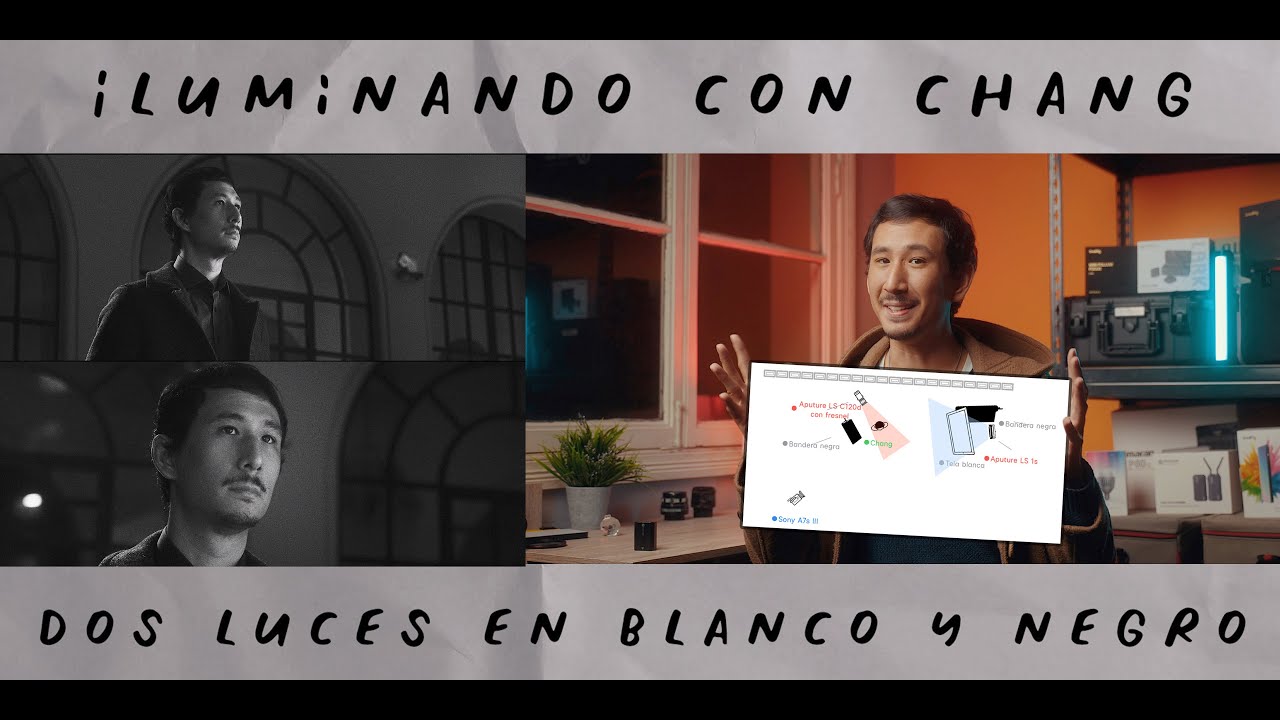
There's something really satisfying about a film or video fooling its audience, making them believe the impossible is possible. And the Aputure 600d Pro is one of those tools that help you pull it off. In the intro of the video, for example, it wasn't even daytime: it was 9 at night.
When I shot the video, it was Aputure's most powerful light, comparable to a Joker 800 or a 1.2K HMI.
Full disclosure
Aputure sent me this light. Also, a few years ago I had the luck and the privilege of being an Aputure ambassador for Latin America, so you might see me as a little biased. That's not going to change my opinion much, but it's good for you to know up front: I love Aputure. I've been using their lights since 2013 or 2014, easily, back when I had some plastic LED lights that were pretty powerful for the time and that still work today. That says a lot about the brand.
If you want a more technical, in-depth review, I recommend the ones by Gerald Undone, Gaffer & Gear and Meet The Gaffer, which are really good. Mine are just my personal impressions.
A 300d Mark II, but twice as powerful
If I had to sum this light up: it's a much more powerful 300d Mark II. If you know the quality of light from the 300d Mark II, picture the same thing, only bigger. And you can feel it: it's still really, really good.
Next to the 300d Mark II it's substantially bigger and heavier, but it's twice as powerful, so I didn't expect anything less. If you're used to working with Jokers or HMIs, the extra weight won't bother you much; if you're coming from a 120d or a 300d, you're definitely going to feel how heavy it is.
Built for the outdoors
Following the trend of other lights, the 600d Pro is weather-resistant: it can get rained on and nothing will happen to it. Obviously don't hit it with a hose, but if you're, I don't know, out in the countryside somewhere and need to shoot, it'll serve you pretty well. And it makes sense: lights like this are usually meant to be placed outside windows. In the video we poured water on it to test that.
The controller
The new controller borrows a lot from the 300d Mark II: it's still metal, and they brought over the design language, the way the batteries mount and several of its features, all in a bigger version.
- All in one. It's the light's controller and the ballast at the same time, so you don't need a million cables or an external ballast.
- Batteries on both sides. Like the 300d, you can run it outdoors on batteries, but you need some pretty beefy V-mounts.
- Stand clamp. For mounting the controller on the stand, just like on the 300d. It's exactly the same size, so you can swap them.
- Cables out the sides. The controller has little feet and the cables come out the sides, not the top. If someone gets tangled in the cable, like I do, it doesn't fall over: it just gets pulled to one side.
And if you're going to hang the light from a grid or anywhere it would be dangerous for it to fall, it has a built-in safety chain to tie it off so it doesn't land on someone's head. It's really, really well thought out.
Easy to use
It's super simple: a power button, a wheel that runs all the menus and also clicks, and the regular light mode. You can choose the curve the intensity follows as it comes up, linear or curved, so you get plenty of control.
The fan is configurable too: there are fixed speeds and a smart mode that reads the temperature and adjusts the fan as needed. If you're using it for interviews or anything where sound matters, you might be better off with a constant speed: that way it's easier to clean up in post.
Obviously, compared to lights like the 300d, the fan is louder. But a light like this usually sits far away from the talent, and luckily it comes with a pretty long cable for that. To me the noise is pretty minimal; in fact, I think a Joker 800's ballast is a lot louder.
Effects and Sidus Link
It has the same effects as the rest of their lights, but with the Sidus Link app you can create your own. There's a really fun option that lets you record a video as a reference, and the light reproduces that effect. I tried it with an Amaran 100d, but it's the same on the 600d. It also has music-driven effects and a bunch of other stuff.
Of all the apps I've seen for controlling lights, this one seems the most interesting to me: the layout is pretty easy to understand, and it has options that don't limit you to emulating a TV or the classic fire effect. Almost every light that has access to Sidus Link can do this.
Ports and connectivity
- USB. It's for updates, but I've also used it to charge my phone or another light. I don't know if you're supposed to, but I've done it and nothing bad happened.
- DMX. It has DMX inputs, in case you want to control it that way.
- Remote control. Besides Sidus Link, you can control it with Aputure's remote. I use the old one, not the new one that comes with the 600d, and it still works. If you've owned Aputure lights, you probably have a million of these lying around.
Bowens mount and accessories
It keeps the Bowens mount, like the rest of their lights, so you have access to the Light Dome II, the Spotlight and all the accessories. There are even accessories made specifically for this light, like a 10-inch Fresnel.
Something that got a lot better is the unit's rotation system: you get better angles and, even with a Light Dome or any other modifier on it, you can move it around pretty freely.
Slow motion and gels
One of the uses for a light this powerful is slow motion, and for that you have to raise your shutter speed. The good news is the 600d Pro doesn't flicker, so you shouldn't have any problems.
If you're like me and you like using gels, watch out: with the 600d you'll probably melt a couple, because it's pretty powerful. My tip is to use a heat shield. I use LEE 269: it's a clear sheet that spreads the heat out, so instead of going straight into your gel, it dissipates a bit first and lowers the chances of it getting damaged. It works not just with the 600d, but with any light that puts out a ton of intensity.
Why would you need a light this powerful?
There are lots of situations. When you want to compete with the sun, it's a really good option. Or when you want to create shafts of light, especially in broad daylight: that extra output helps a lot.
Being totally honest, I was super happy with the 300d and the 120ds; I felt like I didn't need more light. Until I tried this one and went: "wow." It really did change how I light certain scenes a bit. Because it's so powerful, I can punch it through a window and it looks super natural, I can diffuse it, I can bounce it. With that much intensity, you can do things you couldn't do before.
LED or HMI
Talking with some friends who run rental houses, they told me HMIs, and especially the Joker 800, are a pain to maintain and act up all the time. I don't know if the same goes for the newer version, but the original Joker definitely had a lot of problems and had to be repaired constantly. And there's an extra cost: every time a bulb blows, you have to buy a new one, and they're not cheap.
In the long run, I think you'll get more out of the LED: less maintenance, no spending on bulbs and, since the price is lower, you'll probably make your money back a lot faster.
Who is it for?
If you're always renting a Joker 800 or HMIs and you're looking for a light that'll last you a long time, maybe buying a 600d isn't such a bad idea. And if you run a rental house or rent out your lights, you can relax: it'll hold up to all the use and abuse of any rental house, and you'll make your money back pretty fast.
A dream come true
When I was in college, the most powerful light we had was a 2K, and to us that was mind-blowing. And it's not like they'd let us take it out just like that. I clearly remember it wasn't even a film light; I think it was for theater. Having lights like these within reach now is a dream come true. In fact, the 300d alone is already a lot more powerful than that light.
Gear I mention
These are affiliate links: if you buy through them, I get a small commission at no extra cost to you.